
Company
Where thermal science meets intelligent systems.
The human body loses and gains heat in predictable ways. Until now, nothing on the market could read those patterns and respond in real time. Temp°IQ™ built the system that does — a single AI-driven platform that senses, decides, and delivers precise thermal output across the entire body surface.
Seven years of filing. Dozens of inventions. The portfolio covers the full thermal stack — from the materials against the skin to the algorithms predicting what happens next. No other company owns this vertical end to end.
Every device runs the same core, speaks the same protocol, and ships under the same regulatory framework — whether it carries the Temp°IQ™ name or a partner’s.
Invest
The Raise
An estimated 490,000 heat-related deaths occur globally each year — on job sites, training fields, and hospital beds — most of them preventable. Workers in rising temperatures, athletes pushing past safe thresholds, surgical patients waiting longer for recovery — they all share the same unmet need: precise, portable thermal protection that adapts in real time.
Temp°IQ™ exists to close that gap. The platform delivers active cooling and heating where the body needs it most — not with ice packs and guesswork, but with closed-loop AI that measures, adjusts, and sustains safe core temperature continuously. From frontline responders to post-operative patients, the mission is the same: protect people, accelerate healing, and bring them home safer.
The return is human resilience — and the financial upside of a platform entering regulated markets where no full-spectrum competitor exists.
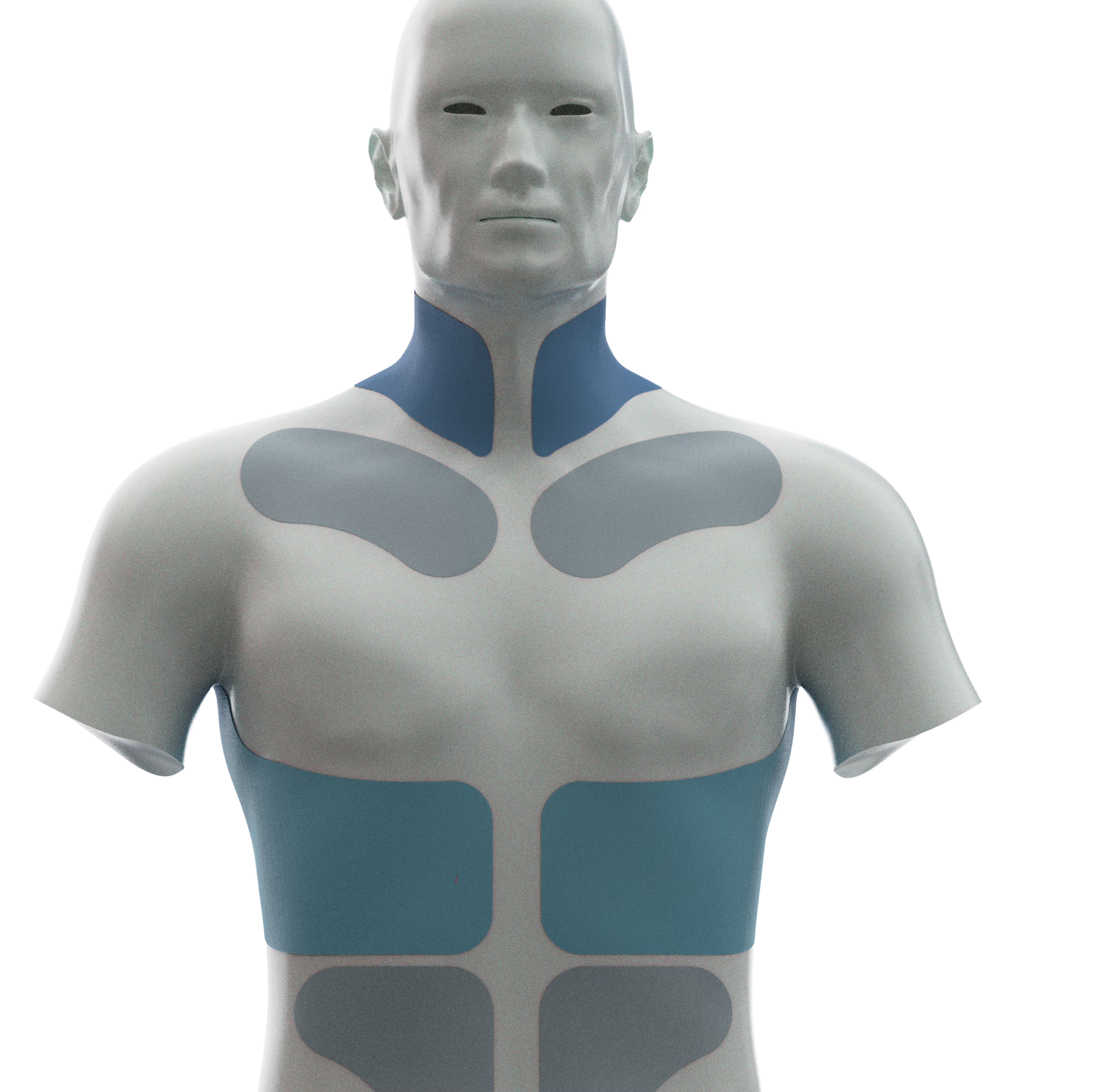
New Science of Cool
We welcome the opportunity to share more with those who share our vision. Detailed materials are prepared and available upon request.
Inquire About Current Offering →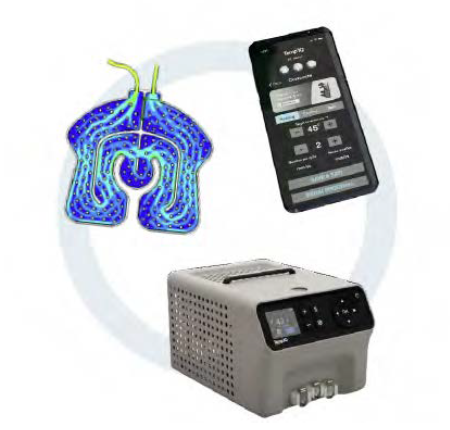
Offerings
Four revenue channels — B2B direct sales, OEM supply, technology licensing, and recurring SaaS — each structured for the sectors the platform serves.
Industry-standard ranges for medical thermal devices, OEM licensing, and health tech SaaS. Sourced from public company filings and published industry benchmarks.
| Metric | Range | Source / Benchmark |
|---|---|---|
| Device ASP (B2B / Enterprise) | $650 – $9,995 | Market range: Breg VPulse $650, Kelvi $1,400, Game Ready $3,200, Nice $9,995 |
| Device ASP (B2C / Consumer) | $200 – $600 | Market range: Ergodyne $30+, Embr Wave $300+, CoolShirt $400+, CompCooler $600+ |
| OEM Engine Supply | Per-unit component pricing | White-label Palomino engines supplied to OEM partners for integration |
| Technology Licensing | Upfront + 8–18% royalty | Exclusive platform licenses (hardware + AI + cloud) command 8–18% of net sales; single-patent non-exclusive licenses typically 2–8% per SEC EDGAR 10-K filings; per-use-sector exclusivity |
| SaaS ARPU (Enterprise) | $500 – $2,000 / seat / yr | Fleet monitoring, OSHA compliance dashboards |
| Hardware Gross Margin | 50% – 72% | Stryker (SYK) 10-K: orthopedic device margins 65–72%; Zimmer Biomet (ZBH) 10-K: 60–70% |
| SaaS Gross Margin | 75% – 85% | Health tech SaaS industry standard per Bessemer Venture Partners Atlas |
| Blended Gross Margin | 55% – 70% | Company estimate: hardware + SaaS + licensing weighted, based on benchmarks above |
| Target LTV:CAC (B2B) | 3:1 – 5:1 | B2B medtech benchmark; 12–24 month payback per McKinsey Life Sciences |
Sources: Competitor pricing from published retail data. Gross margins from Stryker (SYK) and Zimmer Biomet (ZBH) 10-K filings via SEC EDGAR. OEM royalty ranges from medtech IP licensing precedents in SEC filings. SaaS benchmarks from Bessemer Venture Partners Atlas. LTV:CAC benchmarks from McKinsey & Company Life Sciences.
Offerings
Phased market entry beginning Q4 2026, targeting high-value enterprise verticals first, then expanding to consumer channels.
Market Drivers
Legislative mandates and cultural momentum are creating unprecedented demand for thermoregulation technology.
In venture-backed markets, growth depends on adoption — and adoption depends on willingness to pay. Legislation changes that equation entirely. When a federal agency mandates employer compliance or a payer is required to reimburse a therapy category, the buying decision shifts from discretionary to obligatory. The addressable market is no longer theoretical; it is written into law.
For thermoregulation specifically, a rare convergence is underway: workplace safety regulation, healthcare reimbursement reform, and state-level insurance mandates are all moving in the same direction at the same time. Each creates a distinct purchasing trigger. Together, they form a legislative floor beneath demand — the kind of structural tailwind that reduces market risk and compresses adoption timelines in ways that consumer trends alone cannot.
Federal — OSHA
OSHA published a proposed federal heat standard in August 2024, with public hearings concluded July 2025. The rule would require all employers in general industry, construction, maritime, and agriculture to create heat hazard evaluation and control plans — covering both outdoor and indoor settings. This is the first federal heat-specific workplace standard in U.S. history, creating a compliance obligation across every sector Temp°IQ™ serves.
Federal — CMS
The Non-Opioids Prevent Addiction in the Nation Act requires CMS to provide separate Medicare reimbursement for non-opioid pain management, including thermal therapy devices. This expands payer coverage for post-surgical cooling systems and creates a direct revenue path in orthopedic surgery, sports medicine, and post-operative recovery.
New York State
New York Senate Bill S 2063-A, signed by Governor Hochul, mandates insurance coverage of scalp cooling therapy for chemotherapy patients. Effective January 1, 2026, it is the first state law of its kind in the U.S. — establishing a precedent that other states are expected to follow.
When OSHA finalizes the heat standard, employers across construction, agriculture, logistics, and manufacturing will be required — not encouraged — to implement heat illness prevention plans. Companies that cannot demonstrate compliance face federal citations and penalties. That regulatory pressure converts directly into procurement budgets for cooling technology, personal thermal monitoring, and heat safety infrastructure.
Meanwhile, CMS reimbursement expansion through the NOPAIN Act opens a parallel revenue channel on the clinical side. Hospitals and surgical centers can now bill separately for non-opioid thermal therapy — removing the cost barrier that historically limited adoption of cooling devices in post-operative settings.
The combination is unusual: a platform positioned at the intersection of workplace safety compliance and healthcare reimbursement reform, with both channels driven by federal mandate rather than market sentiment. For investors, this means demand is structurally anchored — not dependent on a single product cycle or consumer trend.
Thermoregulation technology is entering mainstream conversation. Athletes, first responders, and industrial workers are adopting cooling solutions as standard protective equipment rather than specialty medical devices.
High-profile coverage in outlets including Vogue and Forbes has elevated consumer awareness of cooling therapy across beauty, wellness, and performance verticals — shifting the market from clinical-only to consumer-clinical hybrid.
Offerings
Six product lines spanning four market segments — medical, athletic, industrial, and consumer — all on one platform.
The Temp°IQ™ App controls each device and collects data for an optimal experience
Six products built on one unified electronics architecture, AI layer, and mobile app ecosystem. No competitor spans bedside, wearable, and cranial thermo regulation — enabling cross-sell, OEM licensing, and data aggregation across every segment.
 Clydesdale
 Labrador
 Bedside
 Palo LD
 Palo HD
 HALO CTP
Market
Over 32 million Americans work, train, recover, and serve in conditions where thermoregulation is critical — and no existing solution covers the full spectrum.
Market Drivers
Published industry reports project strong growth across every segment the Temp°IQ™ platform addresses.
Cloud-connected devices that track patient vitals between clinic visits. The Temp°IQ™ platform streams real-time core temperature, skin temperature, and thermal dose data to clinician dashboards.
Fortune Business Insights, 2024 — RPM Market ReportBody-worn devices that continuously monitor and manage patient health outside traditional clinical settings. Temp°IQ™ occupies the active thermo regulation layer—closed-loop cooling and heating worn directly on the body.
Grand View Research, 2024 — Wearable Medical Devices ReportWearable cooling and heating for personnel in the field, Bedside Series units for mobile medical teams, and thermo regulation for enclosed operational environments.
MarketsandMarkets, 2024 — Military Wearables ReportConstruction crews, utility workers, warehouse operators, and agricultural laborers working in rising ambient temperatures. Cooling vests with active thermo regulation reduce heat injury risk before symptoms appear.
Transparency Market Research, 2024Perioperative warming, targeted temperature management, and post-surgical recovery. The Bedside Series provides continuous, AI-driven thermo regulation at the point of care—replacing static blankets and manual ice protocols.
Fortune Business Insights, 2024 — Patient Temp Management ReportSurgeons in lead aprons, OR staff in full barrier PPE, and cleanroom operators face sustained thermal burden with no active cooling. Temp°IQ™ addresses the thermal gap inside protective garments that existing PPE does not solve.
Grand View Research, 2025 — PPE Market ReportWelders, foundry workers, steel mill operators, and firefighters in turnout gear endure extreme heat trapped by mandatory PPE. Active cooling and heating integrated into existing garments represents an unserved layer of the industrial protective clothing market.
MarketsandMarkets, 2025 — Protective Clothing ReportRecovery, rehabilitation, and sideline intervention for athletes at every level. Cooling vests for exertional heat management and Bedside Series for concussion protocol monitoring give athletic trainers real-time thermal control.
Grand View Research, 2024 — Sports Medicine Devices ReportCards sorted by growth multiplier. All figures from published industry reports (2023–24 base year, 2030 forecast).
Dual-lens sizing: top-down from published industry reports validates the market ceiling, bottom-up from countable U.S. buyer populations validates that real customers exist at scale.
Top-Down — Published Industry Reports
Bottom-Up — Countable Customer Base
Independent build from identifiable buyers, unit pricing, and sales capacity—cross-referenced against the top-down ceiling above.
Market Drivers
Temp°IQ™ offers a full-spectrum platform spanning bedside engines, wearable cooling, and cranial therapy — unified under one AI-driven closed-loop architecture.
The science of thermo regulation has moved forward. The market has not. Most devices sold today still rely on ice-circulating wraps, passive phase-change inserts, or single-zone compression — technologies largely unchanged since the 1990s. They cool one area, for a limited time, with no ability to sense, adapt, or learn.
The chart maps two dimensions that matter most: how a device cools (passive ice to AI-driven closed-loop) and how much of the body it covers (single zone to full body). Every competitor sits in the lower left — one zone, one modality, one market.
Temp°IQ™ stands alone in the upper right. Six product lines, one architecture, one AI layer, one app — from the operating room to the sideline to the job site. Where others must build or acquire separate products for each setting, the Temp°IQ™ platform serves all four market segments from a single engineering foundation. That is the moat.
Feature comparison based on publicly available product specifications and company websites as of 2024.
Temp°IQ™ Platform
Existing competitors address one body zone with one cooling method — ice-based wraps for joints, evaporative vests for labor, or Peltier patches for consumer comfort. The Temp°IQ™ platform delivers active heating and cooling across bedside engines, wearable vests, and cranial devices, all governed by AI-driven closed-loop control through a unified app. This architecture enables cross-sell across customer segments, OEM licensing, and aggregate thermoregulation data that single-product companies cannot generate.
Investor Relations
One platform. Four product lines. Regulatory tailwinds, expanding reimbursement, and zero full-spectrum competitors.