
Clydesdale

Bedside Series

Thermostat control, protocol management, and real-time sensor data — from bedside to the field. Fluid temperature, skin telemetry, and session analytics streamed live to clinician and patient.
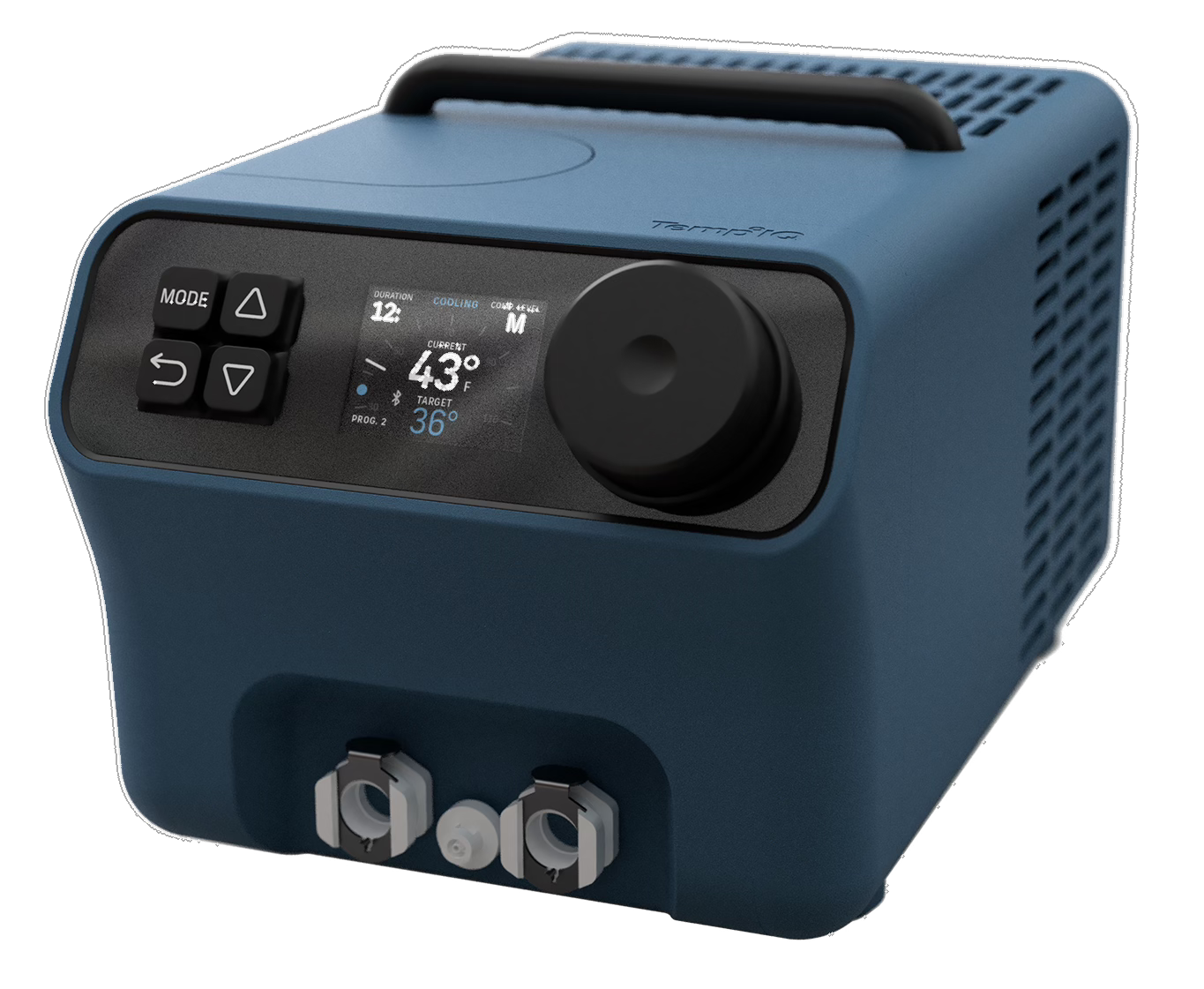
Biometric Sync Fluid & Skin Temp Live Session Analytics Connected Ecosystem OTA Updates
Clydesdale thermal engine — navy

Interactive Prototype

Scroll and tap to explore the live app

Device Screen

Set. Control. Sustain.

Precise temperature control, sustained at target for the full duration of treatment — from a single intelligent platform.
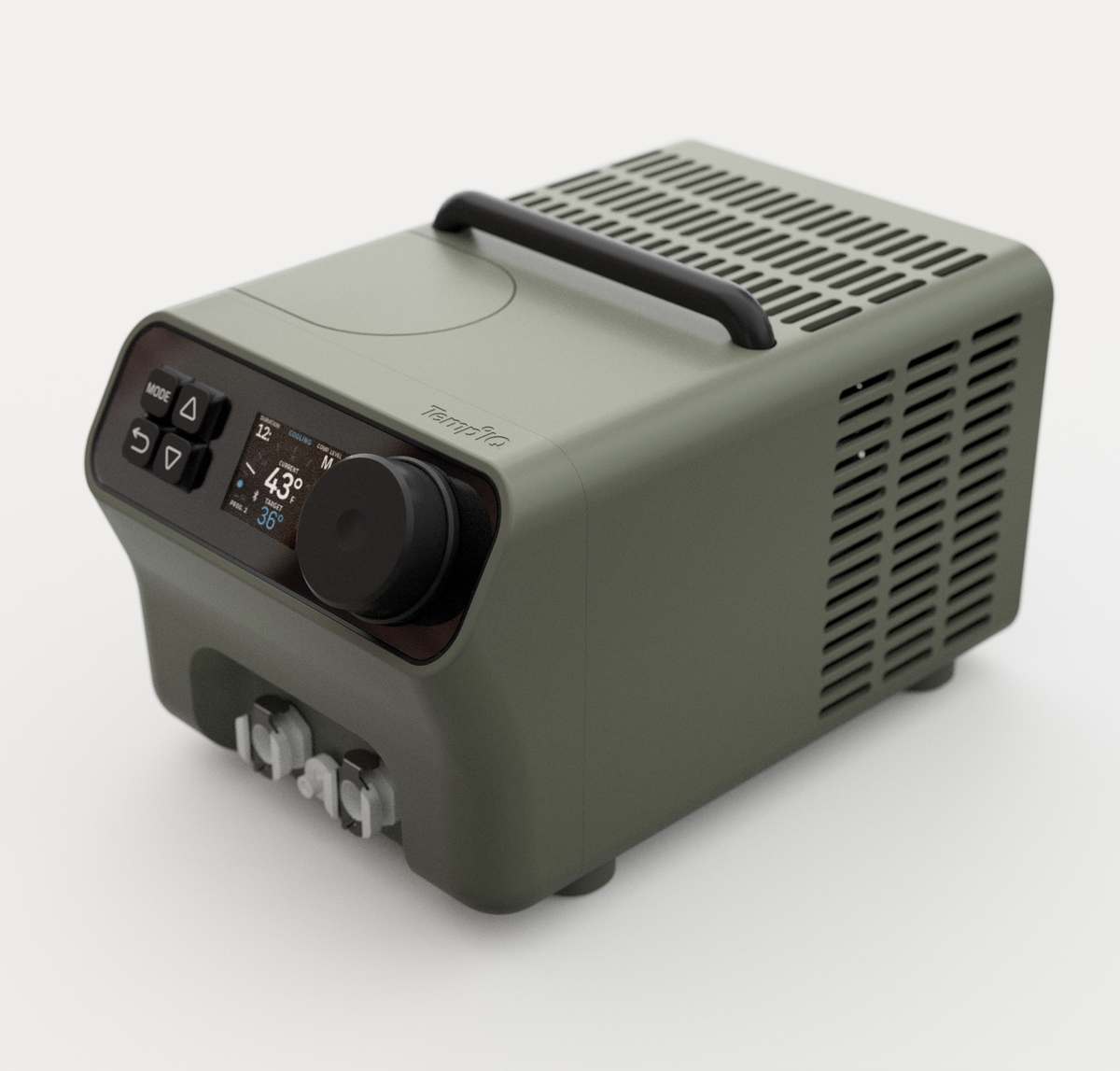
Clydesdale thermal engine — OD green

Clydesdale Engine Display

Live cooling cycle — 43°F to 36°F target

Palomino

Palomino Series

Thermal comfort in the user's hands. Ambient-aware presets, manual dial control, and three operating modes — Manual, Assisted, and Automatic — with real-time feedback from onboard sensors.
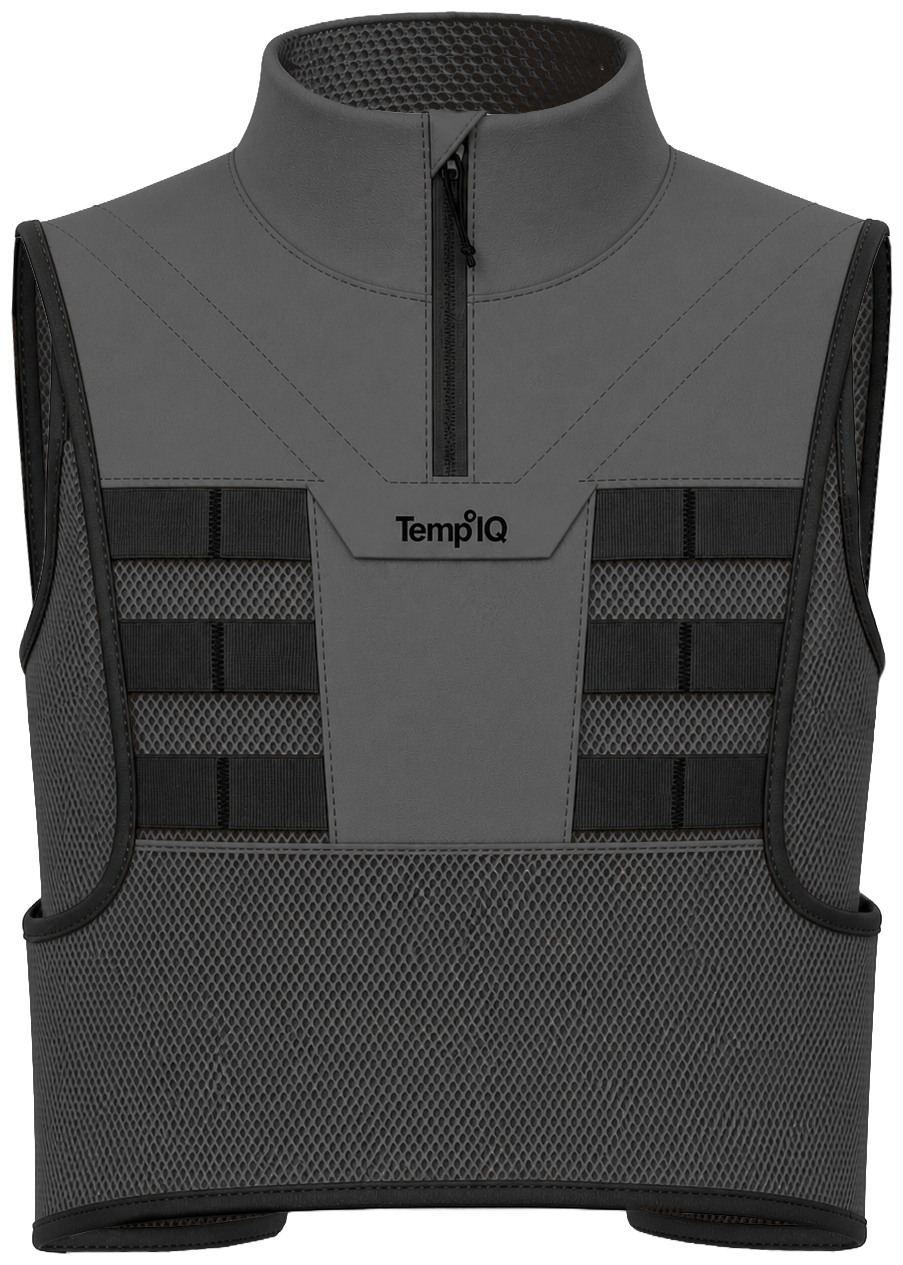
Biometric Sync Smart Watch Compatible Predictive Comfort Smart Adaptive Connected Ecosystem Ambient Sensing
Palomino HD vest — charcoal front view

Interactive Prototype

Scroll and tap to explore · Pairs with CORE, Oura, Apple Watch & Garmin

Digital Control

One Platform, Every Product

Unified electronics. Unified AI. Every product learns from every session. The software reshapes itself per application — protocol management and EMR readiness at the bedside, ambient-aware presets and biometric sync on the body.

Intelligent Thermoregulation

Ambient Temperature Onboard thermistor — always active
Core Body Temperature External sensors evolving to standalone estimation
User Preference Mild · Moderate · Dynamic or manual dial
Running Algorithm Ambient + CBT + preference + heat load = optimal targeted temperature
Thermal Output Adjusts cooling via BLE command — manual override always available

Analytics

Platform Intelligence

Clinical-grade insight, purposefully designed. Remote oversight, workforce protection, and adaptive intelligence — unified in one platform.

Every session, visible from anywhere. Live vitals, fluid temperature, and skin telemetry — streamed to one refined clinical view.

View Dashboard
Temp°IQ™ Remote Session Monitor Clydesdale — Sample Patient — Left Knee Protocol
Target 38°F
Fluid Temp 41°F
Skin Temp 72°F
Ambient 74°F
Session 12:47
Status At Target
72 bpm
Heart Rate
98.6 °F
Core Body Temp
98 %
SpO2
16 /min
Resp Rate
3 /10
Pain Score
65 °F
Fluid Temp
91.4 °F
Skin Temp
Δ
26 °F
ΔT (Gradient)
240 W
Heat Extraction
230 mL/min
Flow Rate
Auto — adjusting flow to maintain 98.4°F target
Temperature °F over session
Mode: Assisted Protocol: Cold — Continuous 20 min Device: Clydesdale v1.2 Clinician: Dr. X (remote)
HIPAA FDA Registered ISO 13485 HL7 FHIR End-to-end encrypted · SOC 2 Type II

Great teams are built on trust — and trust starts with safety. Automated thermal protocols, adaptive cooling and heating control, workforce analytics, and shift-level compliance reporting give your team the confidence that their well-being comes first.

View Dashboard
Workforce Thermal Command Center Site: Sample Site — 14 Active Vests — 97°F Ambient
Active Crew 14
Avg CBT 99.4°F
Alerts 2
Heat Index 108°F
Shift Elapsed 4h 12m
OSHA Status Compliant
97°F Ambient
68% Humidity
4 mph Wind
UV 9 Very High
16 min Next Rest
WorkerCBTHRVest ModeBatteryRisk
Worker 0199.1°F74 bpmAutomatic72%Low
Worker 02100.2°F89 bpmAutomatic58%Elevated
Worker 03101.1°F104 bpmDynamic34%Rest Now
Worker 0498.9°F68 bpmModerate81%Low
Worker 05100.8°F96 bpmDynamic22%Battery
Worker 0699.3°F71 bpmAssisted65%Low
Why Real-Time CBT Monitoring Matters
$165,514 OSHA penalty per willful violation — $16,550 per serious violation, per employee Source: OSHA Penalties
512B Potential labour hours lost to heat exposure globally in 2023 Source: Lancet Countdown 2024
$835B Potential income losses from occupational heat exposure in 2023 Source: Lancet Countdown 2024
45% Of U.S. firefighter on-duty deaths are caused by heart disease Source: Kales et al., NEJM 2007
50–70% Of outdoor heat fatalities occur in the first few days on the job due to lack of acclimatization Source: OSHA
$2.4T Projected global cost of heat-related productivity loss by 2030 Source: Borg et al., Env. Research 2021
Acclimatization & Heat Procedure Rules
OSHA (Federal) 50–70% of outdoor heat fatalities occur in a worker’s first few days on the job New workers: 20% exposure Day 1, increase 20% per day over 5 days Returning workers: 50% Day 1, 60% Day 2, 80% Day 3, 100% Day 4 Acclimatization lost after ~4 days away; fully reversed in ~14 days OSHA Acclimatization Guide ↗
Cal/OSHA §3395 (Outdoor) Protections trigger at 80°F — high-heat procedures at 95°F Water: 1 qt/hr/employee, accessible at all times Shade: available when temp exceeds 80°F; immediate access on request High-heat (≥95°F): mandatory 10-min cool-down every 2 hrs, buddy system, pre-shift meetings Cal/OSHA §3395 Full Text ↗
Cal/OSHA §3396 (Indoor) Indoor protections at 82°F — additional controls at 87°F Cool-down areas maintained below 82°F Close observation during 14-day acclimatization period for new employees Emergency response procedures and supervisor training required Cal/OSHA §3396 Full Text ↗
Site Supervisor: On Duty Incidents Today: 0 Coolant Refills: 3 of 14
OSHA NIOSH Cal/OSHA ANSI Z87 Real-time CBT · Event-driven alerts · Shift-level audit trail · Acclimatization tracking

A platform that learns. Per-user calibration, predictive risk scoring, and pattern recognition across 250+ biomarkers — refining itself with every session.

View Dashboard
Biomarker Intelligence & Adaptive Learning De-Identified Aggregate — 2,847 Sessions — All Devices
94 Health Score
Total Sessions 2,847
Unique Users 412
Avg Time to Target 4.2 min
Prediction Acc. 94.1%
Calibration V2
Risk Flags 23
Connect
250+ health metrics from wearable and environmental sensors
Analyze
Per-user ML models correlate thermal, cardiac, and activity data
Act
Predictive alerts, adaptive protocols, and autonomous calibration
V1 — Ground Truth
External CBT sensor required. Internal sensors logging silently, building per-user dataset.
V2 — Supplementing
Internal sensors contributing to CBT estimates alongside external. Correlating patterns with ground truth.
V3 — Standalone
External sensor no longer required for calibrated users. Per-user model drives autonomous estimation.
Cooling Efficiency +12% at ambient >90°F when Dynamic mode engaged within first 3 min
Recovery Correlation Sessions sustaining target ±1°F for >15 min show 2.3x faster girth reduction
Predictive Alert CBT rise >0.4°F/hr predicts heat stress event with 89% confidence — 22 min average lead time
Data: De-identified, HIPAA compliant Export: CSV, HL7 FHIR, API Retention: 5 yr per FDA
HIPAA GDPR ISO 27001 SOC 2 De-identified · Per-user encryption · 250+ health metrics
InteroperabilityOpen Architecture, Ready to Integrate

Interoperability

Open Architecture, Ready to Integrate

The Temp°IQ™ platform is built on standard protocols across clinical, enterprise, and device layers — architected from day one for third-party integration and OEM licensing.

Device Layer
BLE 5.0Native low-energy wireless telemetry across all TempIQ devices
ANT+Protocol-ready for sport and fitness sensor ecosystems
USB-C / SerialWired data export available for clinical research environments
Platform Layer
REST APIStructured endpoints for sessions, devices, and analytics — built for partner and OEM access
WebhooksEvent-driven architecture supports real-time alert and session notifications
MQTTLightweight pub/sub messaging layer architected for scalable IoT deployments
Enterprise Layer
HL7 FHIR R4Data model aligned with FHIR R4 for future EMR integration pathways
DICOMThermal map output structured for medical imaging system compatibility
CSV / Excel ExportBulk data export for compliance reporting, audits, and partner data sharing
SecurityEnterprise-Grade Data Protection

Security

Enterprise-Grade Data Protection

The Temp°IQ™ platform is designed with security at every layer — from device-level encryption to cloud infrastructure and access control.

Encryption
AES-256 at rest, TLS 1.3 in transit. End-to-end encryption from device sensor to clinician dashboard — no plaintext data at any hop.
HIPAA Compliance
Business Associate Agreement (BAA) ready. PHI handling follows the HIPAA Privacy and Security Rules with full audit trail logging.
SOC 2 Type II
Annual third-party audit of security, availability, and confidentiality controls. Continuous monitoring and evidence collection.
Access Control
Role-based access (RBAC) with SSO/SAML support. Multi-factor authentication enforced for all clinician and admin accounts.
Data Residency
Choose deployment region to meet local data sovereignty requirements. US, EU, and APAC availability with geo-fenced storage.
De-Identification
Built-in PHI de-identification engine for research and analytics. Safe Harbor and Expert Determination methods supported.
R&DResearch & Development

Learn More

See the Platform in Action

Get in touch to see the Temp°IQ™ app and intelligence layer.

Continue Exploring